
Introduction: Learning and Teaching English Literacy

I once played Chinese checkers before I get to learn how to play chess. The strategies are different because literally, the game boards are different. The movement of each playing piece are also different, but winning both games requires you to find a “pattern”. Playing these games are like learning and teaching literacy.
Being an ESL Student
Learning English literacy was as dynamic and challenging as navigating the strategic moves in board games. I am not a native speaker, but English is my second language. Besides Filipino and English language, I speak other dialects. Learning dialects was essential for me to effectively communicate and integrate with the local community. Initially, I prioritized learning my own dialect called “kankana-ey”, then I learned Ilocano and Ibaloi. This enabled me to establish communication, rapport and build relationships in a larger community of other tribes. However, despite the importance of local dialects, English was still the primary language I learned due to its universality. And eventually, I sought to master Filipino language too, as an important aspect of my cultural heritage.

I remembered that in kindergarten (K1) and primary school (Grades 1-6), English was taught in a whole language approach. Then in high school (Freshmen to Senior High), English class is typically reading literature. Contextual learning is applied for grammar and communication. There was less emphasis in listening. As a result, I have to relearn phonics and audio-lingual method while in university. After completing my university education, I found that my communication skills fell short of international standards, a realization that led me to resign from my first formal teaching position. Determined to improve, I sought out an ESL Academy renowned for its intensive dentalization approach (dental articulation), a method of teaching that emphasized correct pronunciation and enunciation. The entire program is often referred to as “The American Accent Training.” This academy’s rigorous training program was designed to help teachers achieve a level of proficiency that would enable them to deliver effective language instruction to students. I think it is also a similar strategy they apply in call centers training.
Seeing Literacy like Game Boards
My background makes me think then that, the distinguished game boards of Chinese checkers and chess are like your approaches in teaching English Literacy. Particularly in Southeast Asia, the culture and the language affect the overall learning environment.
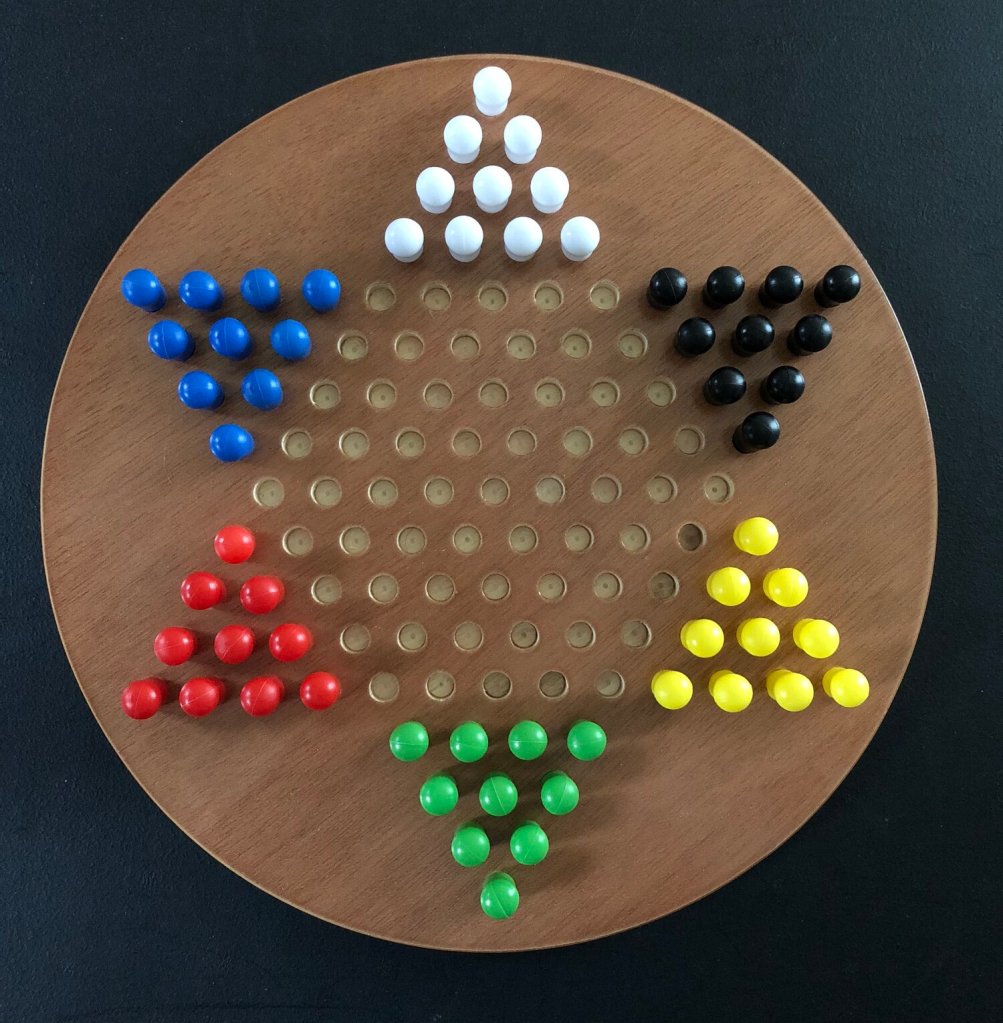
If you are not familiar with Chinese checkers, here is how the game board looks like. The Chinese Checkers board is shaped like a star, with 121 colored positions for the players’ marbles or tokens. The border of the board is highlighted in a thin circle, with each player’s starting point at the edge of the star’s points. At the center, a large neutral zone is the target for all players, which can be captured throughout the game.
So when you teach English literacy, you need that neutral zone. Imagine a small class of 15 students, and composed of different nationalities like Chinese, Filipino, Vietnamese and Khmer. How would your English class look like? China has several varieties of the Chinese language. The Philippines has several dialects. Vietnam has dialects in addition to Vietnamese. The Khmer language may not have other dialects, but it has a complex tone.

Some say the game theory is well applied in playing chess. A chess board has 64 squares arranged in 8 rows and 8 columns. The rows are called ranks and the columns are called files. They are alternating between light and dark colors. Finding patterns in the arrangement of the squares is key to the game’s strategy. Each square on the board has a unique name for identifying piece positions and tracking moves during play.
Teaching English literacy also requires strategic arrangement of contents and delivery. Tracking data and progress is definitely painstaking.
Finding Patterns in Language
Recognizing patterns can be crucial in games like Chinese Checkers and chess. This principle also applies to teaching English literacy. Finding patterns in language can help both students and teachers. These include rhyming schemes, sentence structures, or common phrases. This method aids in learning and mastering the intricacies of English more effectively.

 Per-nal
Leave a comment