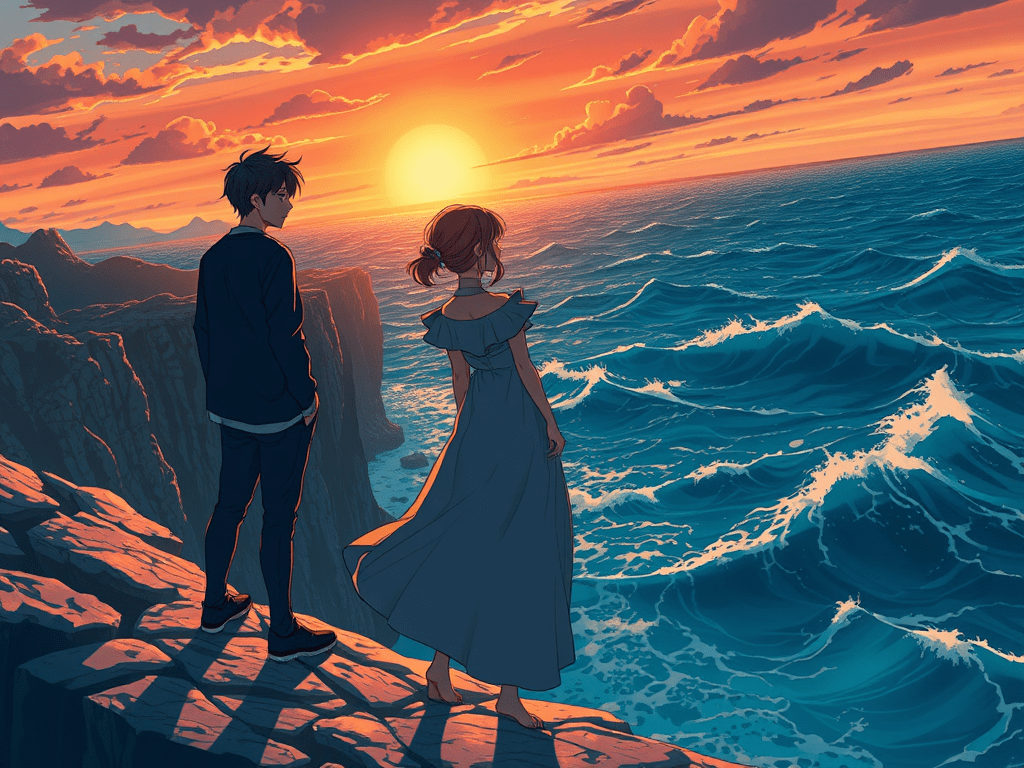
Pip: Per-nal, where the interior life gets a full audit — grief, love, and the particular ache of watching someone you care about disappear into circumstances you couldn't stop.
Mara: Zerayn D. is behind everything here, and the work moves through two distinct territories: poetic grief and loss, and love shadowed by emotional distance. Let's start with the grief.
Poetic Grief And Loss
Pip: Two poems, one gravitational pull — the experience of helplessness when someone you love is taken from you, and what that helplessness does to a person who thought their strength was enough.
Mara: "The Man of Diamonds and his Grief" sets the frame directly. The speaker's beloved is described as a woman unjustly condemned — and the poem doesn't soften it: "unjustly pinned with a scarlet letter, her truth erased, though she knew better, is ushered to despair and pain, for they want her slain."
Pip: That's not metaphor reaching for drama — that's a specific accusation. Someone's narrative was weaponized against her, and the man of diamonds is left holding anger he can't spend usefully.
Mara: Right. The poem builds that out across several stanzas. He wanted revenge, wanted to burn those responsible, but the poem keeps returning to the fact that wanting isn't the same as being able. Even brilliance, the poem says, couldn't undo what was sealed by hate.
Pip: Which is a quietly devastating line — the diamond imagery isn't vanity, it's the setup for a very specific kind of failure. All that hardness, all that light, and still not enough.
Mara: The poem closes as a direct plea to whoever is reading: "hear his plea, the man of diamonds cries, set her free beneath open skies, give her justice so she may heal, let her write what is truly real."
Pip: "Let her write what is truly real" — that detail lands. She's a writer. Her voice is the specific thing being suppressed.
Mara: "A Dance of Grief and Grace: Poetic Insights" moves through similar emotional terrain but from a different angle — grief here is relational, a wound between two people who tried and hurt each other anyway. The poem ends in a tango: two souls who've processed enough to move together, not in resolution exactly, but in motion.
Pip: Both poems are doing the same structural thing — grief as something you carry through, not out of. The diamonds poem is still inside the wound. The tango poem has reached the other side of it, barely.
Mara: And that difference in position is what makes them work together. One is the cry, one is what comes after the cry finds somewhere to go.
Pip: From grief that's still raw to love that's started to cool — let's look at what emotional distance actually costs.
Love And Emotional Distance
Mara: "Love and Fear" asks what happens when one person in a relationship burns at a different temperature than the other — and whether love can survive that asymmetry.
Pip: The poem is direct about who's who: "you chased the glow you saw in me, depended on my energy, yet when my strength burned fierce and bright, you stepped away toward safer light."
Mara: And the speaker doesn't romanticize the dynamic. What looked like love was, on closer inspection, something more transactional: "yet what returned was not pure care, but measured acts, a cold affair, affection weighed on careful scales, with hidden terms in veiled details." The ledger was always running; the speaker just didn't know it.
Pip: The poem's final move is the one that stings — the speaker says what frightens them isn't their own fire, but the other person's fragility. Fear as the real distance between two people.
Mara: Which connects back to the grief poems more than it might seem. Distance, suppression, the inability to protect what matters — the thread runs through all of it.
Pip: Grief that can't act, love that can't quite reach — Per-nal keeps returning to the gap between feeling and being able to do something with it.
Mara: Next time, we'll see where that gap leads. Stay with us.


Leave a Reply